Tuesday, August 28, 2007

It’s Not Language Error

I’m as guilty as any computer-savvy teen of sprinkling my writing with the abbreviations and shortcuts that are popular in email, online chat, IMs, and text messages. To be honest, these shortcuts don’t bother me because I like to think that I know enough about language use to avoid any embarrassing slips into emoticons, acronyms, and abbreviations in rhetorical situations where they don’t belong.

The NCTE Beliefs about the Teaching of Writing explain that “Just as the nature of and expectation for literacy has changed in the past century and a half, so has the nature of writing. Much of that change has been due to technological developments, from pen and paper, to typewriter, to word processor, to networked computer, to design software capable of composing words, images, and sounds.” Part of this change has been the development of abbreviations for the words and phrases used in digital messages. As children and teens learn to use digital tools to communicate with others, they adopt the language of the Internet—its abbreviations, diction, and grammar.

Yes, I said grammar. There is a clear system behind Internet language usage. Microsoft’s A Parent’s Primer to Computer Slang discusses some of the most basic rules behind the evolving word choice people make online. Describing Leetspeak, the article explains, for instance, how word spelling has evolved:

Numbers and symbols replace the letters that they resemble. You could write the term “leetspeak” as “!337$p34k”. The character “!” replaces the letter L, “3” replaces E, and so on. Other examples of character/letter replacement might include “8” for B, “9” for G, and the number 0 for the letter O.
Whatever the Internet language you explore, you will find very specific rules in place that govern diction. Sometimes, as is the case with leetspeak, the rules are playful substitution that creates a special code. Other times, the rules have to do with technological limitations. Many shortened word forms and abbreviations result from the limited length of text messages. If you can use “b4” for the word before, you’ve saved four characters.

Nonstandard capitalization springs from similar roots. Typing a capital letter in a text message requires two keystrokes (one to turn on caps, one for the letter), so writers opt for the faster lowercase version of the words if the meaning will not suffer. Consider the Internet abbreviation “LOL,” which stands for “laugh out loud.” In a cell phone text message, the all caps version could take up to six keystrokes, while the lowercase takes only three. In the frequently high-speed communication of text messages, writers are more likely to opt for the lower number of keystrokes.

Beyond diction and conventions, there are clear grammatical rules at play in the use of Internet slang and communication. A fun example is lolcats, images of cats (like the illustration above) that include playful captions that invoke a grammar all their own. Anil Dash has outlined some of the underlying grammar rules of the lolcats in his blog entry “Cats Can Has Grammar.” The grammar of lolcats includes attention to verb tense, pronoun use, and sentence construction. In fact, lolcats require multimedia literacy skills, as writers combine image with caption and follow conventions for font appearance, caption placement, and overall layout.

The systems that I see Internet writers use don’t indicate laziness or a lack of education. Far from it. They require complex understandings of how language works. When students use Internet language in the wrong place, we shouldn’t mark their work incorrect any more than we would mark students’ use of dialect and home language wrong. What we should do is talk about code-switching and how the uses of Internet language and Standard English contrast. In Code-Switching: Teaching Standard English in Urban Classrooms, authors Rebecca S. Wheeler and Rachel Swords state:
When we talk about “proper grammar”; and “good English,” we make a lot of assumptions about the nature of language. We assume that English is Standard English. We assume that Standard English is Right with a capital R, and that anything else is improper, bad, incorrect, and fractured. Indeed, we seem to believe that anything other than Standard English is pretty much not English. (5)
Their observation fits Internet language well. Articles like the Hartford Courant’s “R T33ns KO'ing Eng?” begin with the notion that there is or may be something wrong with writers’ use of emoticons, acronyms, and abbreviations in digital messages and texts. In truth, it’s not error. It's just language in use in new and creative ways. The best thing teachers can do is take advantage of this language play and explore the ways that words and phrases and clauses work in the different kinds of language that we all use.

READERS: Please take a second after reading to share some immediate feedback by clicking the comment buttons below that reflect your reaction to this entry! I’m always trying to improve the blog, and your feedback will help me make sure I’m meeting your needs.

Tuesday, August 21, 2007

The Joys and Challenges of Literacy Instruction

Whether new or experienced teachers, we all face challenges as we enter the classroom to teach students the literacy skills they need in the 21st century. NCTE’s Guideline More than a Number: Why Class Size Matters, which focuses on the challenge of overcrowded classrooms, describes the situation well:

The Standards for the English Language Arts describe and clarify what students should learn in English Studies and Language Arts—reading, writing, speaking, listening, viewing, and visually representing—to be literate in today’s world. This expanded definition of literacy occurs at a time when classrooms are more culturally diverse than ever, when technology and cyberspace bid for schools’ attention and dollars, and when employers are calling for more and more highly skilled workers.
These challenges make our jobs tougher than ever, yet we return to the classroom every year, knowing that the joys outweigh the challenges.

Annual Convention Speaker Jonathan Kozol, featured in this week’s Boston Globe story “Schooled in Persistence: Kozol Still National Conscience on Education,” speaks to some of these challenges in his new book Letters to a Young Teacher, in which he “gently guides a first-year teacher into ‘the joys and challenges and passionate rewards of a beautiful profession.’” As I thought about Kozol’s mentorship of the young teacher and the challenges we face as we enter the classroom, I was inspired to share a story of my own.

One of my biggest joys in the classroom is what I call “the light bulb moments”—those moments when you’re working with students and you see their sudden understanding of a new idea or concept. In cartoons, it’s that moment when light bulbs appear above characters’ heads. Those are the moments I live for in the classroom—those moments when a student “gets it.”

I remember in particular William’s light bulb moment. My first-year college comp class in Spring 1993 focused on the ways that the writer’s perspective affects the meaning and language of a message. Students read pieces by Jane Tompkins, Harriet Jacobs, and Alice Walker, and we talked about how writing takes place in a social context. I asked the class to do some fairly complex and sophisticated thinking, and their writing showed that they were struggling a bit with the task.

One day in the middle of this course, William was slow to gather his belongings and leave, so I asked him if he had a question. He stepped up to the desk and said, “I’ve been watching some of the TV about that thing in Waco. You seen it?” He was referring to the ATF raid on the Branch Davidian ranch near Waco, Texas, and the subsequent siege that was still underway there. “I was writing about it in my journal,” he continued. “You see different reports and stuff on different channels.” I nodded, and he went on, “When they talk to the witnesses, they say different things about it and it has to do with what they care about. That’s just like those things we’ve been reading. That’s what you’re talking about, right?” A light bulb moment! He didn’t know it, but William had had a light bulb moment as he wrote that journal entry and made the connections between what he had been reading and current events.

William’s light bulb moment remains one of my fondest memories of teaching. As we re-enter the classroom this fall, I hope we all have more joyful moments than challenging ones. If you have stories of joys from your teaching experiences, please share them in the comments. Every teacher loves to read of classroom successes!

READERS: Please take a second after reading to share some immediate feedback by clicking the comment buttons below that reflect your reaction to this entry! I’m always trying to improve the blog, and your feedback will help me make sure I’m meeting your needs.

Wednesday, August 15, 2007

Building Community After the First Day

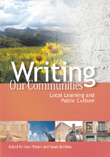
Writing Our CommunityAs we head back to school, we face the challenge of building eclectic groups of students into engaged literacy communities. Once the icebreakers are over, what do you do?

One great solution is to launch a collaborative inquiry-based writing activity that gets students involved with one another. Working in small groups, students can get to know a few others well and can build strong classroom communities as they explore, create, and reflect on their inquiry task.

Local community inquiry projects offer a strong option for the first weeks of class. Contributors to the NCTE book Writing Our Communities: Local Learning and Public Culture explain in their preface:

We believe that students need to engage the multiple communities that surround them and also that those communities benefit from the energy and enthusiasm that students can bring to active citizenship, where citizenship means recovering critiquing, and actively engaging the world around them. Once teachers encourage their students to research and to write about community, the classroom comes alive in wonderful and unexpected ways. As students learn more about the communities around them, they discover how important keeping community ties and creating new ones can be. (p. xi)
What better activity could you hope for in the first days of school than one that encourages creating new ties and strengthening existing ones?

For some classroom activities focusing on local community inquiry, try these resources:


Tuesday, August 7, 2007

The Best Kind of Student Writing

no frozen green beansThe CNN article “Kids Take on Lunch Lady—and Win” describes how second graders undertook a letter-writing campaign at William V. Wright Elementary School to convince the cafeteria workers to stop serving frozen green beans. After reading Andrew Clement’s book Frindle, in which the main character considers organizing a cafeteria boycott, students at the Las Vegas school discussed ways to protest the food in their own cafeteria. They wrote letters to the cafeteria workers, including comments like these:

"Dear Mrs. Duits, The food is so yummy and yummy. But there are one proplem. It is the green beans," wrote Zhong Lei.

"We love the rest but we hate the green beans," wrote Viviann Palacios.
As a result of their letters, the food service department of the Clark County School District talked to the students, had taste tests, and agreed to tweak the cafeteria menu.

In the world of test-driven curriculum, such a writing activity may seem silly. In truth, it’s the best kind of student writing we can ask for. The NCTE Beliefs about the Teaching of Writing explain:
Writing . . . should not be viewed as an activity that happens only within a classroom’s walls. Teachers need to support students in the development of writing lives, habits, and preferences for life outside school . . . . As much as possible, instruction should be geared toward making sense in a life outside of school, so that writing has ample room to grow in individuals’ lives.
The students who took on the “lunch lady” at William V. Wright Elementary learned more about persuasive writing than any amount of test preparation could have taught them. Preparing students to write persuasive letters for standardized tests is meaningless compared to teaching them to compose letters for an authentic audience and purpose with concrete outcomes they can understand. When writing matters beyond the classroom walls, students become better writers. That’s the best kind of student writing!

Tuesday, July 31, 2007

Why I’m for Junie B.

The New York Times’ article “Is Junie B. Jones Talking Trash?” discusses reactions to the misspellings and errors in Barbara Park’s easy-to-read chapter book series on the famous elementary school student. Books in the series follow Junie B., who narrates the stories in an authentic first-person voice. The article explains:

[S]he struggles with grammar. Her adverbs lack the suffix “ly”; subject and object pronouns give her problems, as do possessives; she usually isn’t able to conjugate irregular past tense verbs; and word like funnest and beautifuller are the mainstays of her vocabulary.
Adult readers expecting “correct” language use sometimes balk at Junie B.’s language practices, banning the books from their children’s bookshelves.

This morning, I visited the local bookstore on my way to the office to try to figure out what the fuss was all about. Simply flipping through a few Junie B. books, I could see how parents and caregivers might be concerned. Out of context a sentence from Junie B., First Grader (at last!) like “Me and Herb walked to Room One from the bus” (22) stands out, especially when adult readers are accustomed to standard written English in children’s books. When I read a few pages of the books however, I quickly learned that Junie B. sounded like a perfectly normal kindergartener and first grader.

My mind wandered to NCTE’s Position Statement On the Students’ Right to Their Own Language (1974). The position statement could just as easily be describing poor Junie B.’s treatment by disapproving adult readers:
Members of NCTE and its constituent group, the Conference on College Composition and Communication (CCCC), became concerned in the early 1970s about a tendency in American society to categorize nonstandard dialects as corrupt, inferior, or distorted forms of standard English, rather than as distinct linguistic systems, and the prejudicial labeling of students that resulted from this view.
Junie B.’s nonstandard language use is labeled as “corrupt” and “inferior”’ by these adult readers and the entire series of books is dismissed. If you’ll forgive the rephrasing of the position statement, I, for one, prefer to affirm Junie B. Jones’ right to her own language—to the dialect that expresses her family and community identity, the idiolect that expresses her unique personal identity. I’m for Junie B!

I’m not saying that I would read the books unexamined. I’d ask young readers to think about how language works in the books. I want readers to talk about how Junie B. speaks and writes and why she sounds like a real kindergartner and first grader. In my practice with older students, when students are given the chance to embrace language diversity and authentic language use, amazing things can happen.

The Junie B. Jones series presents a teachable moment. What’s important is that we teach students to revel in language diversity and their own language use—rather than teaching them censorship and a static vision of a language with only one correct form.

Tuesday, July 24, 2007

Every Child is Average

The current No Child Left Behind legislation is based on the idea that every student is capable of being proficient, with performance that falls “in the middle,” between basic and advanced achievement. Regardless of educational background, available family and community support networks, and the in- and out-of-school environment, every child can reach this average level of performance.

The problem is that striving for an average level of proficiency actually dilutes student achievement. As the Education Week article “NCLB Seen as Curbing Low, High Achievers’ Gains” reports, the focus on teaching to the average level of student proficiency leaves students who achieve at higher and lower levels behind. Teachers work to to ensure students reach the mandated adequate yearly progress scores, but in the end, students who are above or below average lose. High achievers aren’t challenged to move beyond average performance, and struggling students are not given the support they need to reach proficiency.

In the NCLB classroom, curriculum is structured to focus on helping the average student do well on a single win-or-lose test. The result is that the literacy skills that all students bring to the classroom can go unacknowledged and unsupported. The only literacy skills that matter are those that apply to the test. Teachers of the youngest students actually take class time to instruct students on how to fill in bubbles on test forms. Learning to color in the lines becomes curriculum instead of true literacy instruction.

We must demand change. No Child Left Behind needs to live up to its name. We need a program that supports the wide range of literacy skills students need in the 21st century and the vast differences among students in the classroom.

To move beyond a system that encourages teaching aimed at the average student and average proficiency, we need to demand the following characteristics become the goal in ensuring every child succeeds:

  • Student achievement should be measured by locally created performance assessments, not one-size-fits-all tests that ignore students who don’t fit in.

  • Curriculum and performance should focus on teaching the full range of literacy skills, not just the literacy of test-taking.

  • School experiences should prepare students with the deep knowledge necessary for success in a global society, not success in filling in the right bubbles on test forms.

  • Assessment should provide timely, concrete feedback to teachers, parents, and students, not numbers with no context and no process for learning from past work.

  • The growth and achievement among English Language Learners should be measured with multiple sources of evidence that document the full range of students’ literacy abilities. English Language Learners should not be assessed with premature tests of English skills that result in misjudged or underrated results.

  • Curriculum and testing should be based on scientifically-valid research that fits the best methods to specific questions. Research is not one-size-fits-all either.

  • Instructional decisions should be based on an archive of powerful research gathered from direct observation of student learning in a range of authentic school settings, not on research that inadequately represents how students learn to read and write.
In the current test-driven environment, students are simply statistics moving through the system. Every child is treated as capable of average proficiency. Individual abilities and knowledge are lost in this constructed vision of students. Children who need more challenging curriculum and children who need more scaffolding and support are left behind. Every child is average in the NCLB system—an average of all the students in the classroom and an average achiever in the world of standardized testing.

In truth, no child is average. Every child is different, and we must demand legislation that recognizes that fact. You can help by taking a few minutes to write your members of Congress and letting them know how they can make the NCLB law work for students, teachers, and schools. Take action now and help ensure that no child is treated like an average student.

Monday, July 16, 2007

Harry Potter and the Integrated Curriculum

Whether we call it integrated curriculum, interdisciplinary studies, or reading and writing across the curriculum, such projects ask students to look beyond the books they read and make personal and far-reaching connections to other aspects of their lives. The English Journal article “Taking Time: Harry Potter as a Context for Interdisciplinary Studies” describes a project that bridged language arts, math, and science as students explore a series of activities related to their reading of Harry Potter and the Sorcerer’s Stone. In addition to these activities, there are many other curricular connections that can be explored:

  • Ask students to sketch out a hierarchical chart of the wizarding world’s government and compare it to the national U.S. and British governments.

  • Extend the discussion of one of the magical creatures in the series by writing scientific descriptions of their habits, habitats, and physical features. Model the descriptions on an encyclopedia entry of a well-known animal or use a Web-based description of a zoo animal like the Giant Panda.

  • Use Thinkfinity partner EconEdLink’s Lost Memo to have students to connect the details from the Harry Potter novels to the currency exchange rate that affects businesses everywhere.

  • Tap the exploration of race, class, sexuality, and gender in the English Journal article “Teaching English in the World: Playing with Critical Theory in J. K. Rowling’s Harry Potter Series” to shape parallel discussions contrasting issues in social studies and history. For instance, invite comparisons of Hermione’s S.P.E.W. (Society for the Promotion of Elvish Welfare) with the labor and anti-slavery movements in the U.S.

  • Consider what Mona Lisa, James Weldon Johnson, or Sequoyah would say if they could talk and move around their portraits like the subjects of the paintings in the Harry Potter novels to explore art and history connections.

  • Explore the language of advertising by asking students to create print, audio, or video advertisements for items that wizards would buy, a store a wizard might shop at, or a service that a wizard might hire someone to perform.

  • Focus on technical and business writing by asking students to create resumes for characters in the book. Consult the ReadWriteThink lesson plan Book Report Alternative: Creating Careers for Characters for resources.

  • Write a letter to the editor for a character, using the ReadWriteThink lesson plan Book Report Alternative: A Character’s Letter to the Editor for materials. Students might write on the same topics that Harry takes up in the novels or choose another topic—arguing for a pardon for Buckbeak, supporting Hermione’s S.P.E.W. efforts, or responding to a news article included in one of the texts.
Have other suggestions? Please share them in the comments!