Monday, September 24, 2007

Reading and Power Relationships

Reading is about power relationships. The power to decide what we read, what counts as reading, and whose readings matter is ultimately at the bottom of text selection. Questions such as “Who chooses the texts?” and “Whose experiences are reflected in the texts?” foreground the underlying power struggles that teachers, students, family, and community members can face as they choose texts for classroom and independent reading.

The English Leadership Quarterly article “Outside Teachers: Children’s Literature and Cultural Tension” (E-M) explains that calls for censorship frequently communicate the tensions between differing cultural and philosophical perspective. Rather than avoiding such differences in perspective in text selection, the article explores how such conflicts can become opportunities for communities “to help students become literate, socially responsible, culturally aware, and contributing citizens” (p. 8) .

Near the end of the article, the author summarizes questions teachers can use as they consider whether a text is appropriate for a particular classroom or student:

Therefore, while reading these books, teachers should pay attention to power relationships as represented in the print and picture text. Some questions Lissa Paul (1998) has identified that could facilitate this process include the following:
  • Whose story is this?
  • Who is the reader?
  • Who is named? Who is not?
  • Who is on top?
  • Who gets punished? Who is praised?
  • Who speaks? Who is silenced?
  • Who acts? Who is acted upon?
  • Who owns property? Who is dependent?
  • Who looks? Who is observed?
  • Who fights for honor? Who suffers? (Paul, p. 16)
      If teachers find the sociopolitical implications that they uncover through this method to be too heavy or overwhelming to deal with at this point in their career, they may want to put the book aside and find an alternative (p. 10).
As I read the list, I realized that its questions served another purpose for me this week. Not only does the list lays out questions that reveal the power relationships within a classroom text, it also illuminates the power struggles implicitly communicated by the 2007 NAEP scores on reading that were released today.

The NAEP scores, after all, are also about power and reading. While the report claims “statistically significant” increases of scores by two points, they cannot deny the overall stagnation of student achievement in reading. Improvement has been creeping along at the same basic level for years, and “improvement” is in the eye of the beholder.

Each of the text selection questions above has a corollary that reveals the power relationships behind the NAEP scores:

  • Whose story does the report tell?
  • Who is the reader of those scores?
  • Who is named, and who is not?
  • Who gets punished, and who is praised?
  • Who speaks in the scores, and who is silenced by them?
  • Who acts, and who is acted upon?

Take, for instance, the three “Reading Top Stories” featured on the 2007 NAEP Reading Scores Page:

  • Average reading scores were higher in 2007 than in 1992 at both grades 4 and 8.

  • Average reading scores were higher in 2007 than in 2005 in 18 jurisdictions at grade 4 and 6 jurisdictions at grade 8.
  • Average scores for White, Black, and Hispanic students at grades 4 and 8 were higher in 2007 than in 1992.

Whose story do these three bullet points tell? Not the students whose strongest literacy skills tap areas other than recognizing facts and understanding vocabulary words. Not the students whose strongest literacy skills focus on reading multimodal texts that go beyond words on printed pages. Not the 4th- and 8th-grades students whose primary literacy skills are more evident in languages other than English.

Who is named? Not the students in the 25 jurisdictions at grade 4 and the students in the 47 jurisdictions at grade 8 whose average reading scores were not higher in 2007 than in 2005. Not the students in grades 1–3, 5–7, or 9–12.

Who speaks? Not the Native American 4th graders, whose performance has dropped 11 points over the last 7 years. Not even the Asian students whose 2007 average reading score, like the Hispanic students, showed a 2 point increase over the 1992 score.

Today's Reading Report Card demonstrates the same kind of cultural tension that the English Leadership Quarterly article refers to. It’s clear that all students are not represented and alarmingly evident that the word reading is defined in narrow ways that do not reflect the expanded, highly complex definitions of literacy that teachers explore in best practices.

Given these shortages, let me end with a challenge, paraphrased loosely from the final quoted passage above:

As we examine the NAEP scores and their coverage in the media this week,  if  when we find the sociopolitical implications these questions uncover too heavy or overwhelming, perhaps we should simply put the scores aside and find an alternative—Instead of focusing on the scores, let's focus on pedagogically-sound, student-centered literacy instruction—whether those students are reading banned books or not.


Tuesday, September 18, 2007

Seeing Ourselves in the Texts We Read

I was touched by a former student’s reflective note shared in the English Education article included in this week’s Ideas section:

I am teaching in West Somewhere High School. The school is 75 % Euro-American and 25 % Latino/a. Kids are the same in this small community as they are in a bigger one . . . . One girl actually told me that I was the first teacher who had introduced any Hispanic authors to her and said that I was the first teacher she has ever had who made her proud to be Hispanic, instead of ashamed of it. (275)
The quoted teacher reveals a situation that occurs all too frequently—a student of color who has completed at least 9 years of schooling and has never had the opportunity to see her own culture in the texts she reads in the classroom.

Why does it matter? Reading texts that are culturally relevant is vitally important to all students, but especially so for language learners. When students see themselves in the texts that they read, they are more interested in reading and often increase their reading for pleasure. Further, they connect with the text in significant ways that lead to deeper comprehension.

In the Talking Points article “Connecting Students to Culturally Relevant Texts,” Yvonne Freeman and David Freeman explain that such language learners “easily construct meaning from a text that contains familiar elements because their background knowledge helps them make predictions and inferences about the story” (7). In her research on the influence of culturally relevant texts, Yvonne Freeman “found that students made higher quality miscues and produced better retellings with the culturally relevant story” (7).

To explore the importance of culturally relevant texts in your own classroom, try the ReadWriteThink lesson plan Assessing Cultural Relevance: Exploring Personal Connections to a Text. This lesson plan draws on the explanation of cultural relevance outlined by Freeman and Freeman to encourage students to look for texts they connect to.

In the activity, the class evaluates a nonfiction or realistic fiction text for its cultural relevance to students personally and as a group (the lesson uses the picture book ¡Sí Se Puede! Yes, We Can! Janitor Strike in L.A.). After completing this full-class activity, students search for additional, relevant texts; each choose one; and write reviews of the texts that they choose. Students are highly encouraged to identify books, documentaries, television programs, or films that are personally relevant to themselves and their peers.

The activity is presented as a secondary lesson plan, but can easily be adapted to other academic levels. A picture book can be used as the basis of any class review to kick-off the lesson. Teachers can also share multicultural short chapter books, novels, poetry, or drama. Additionally, multiculutural films or other multimodal texts. The particular text used is not as important as the clear cultural relevance of the characters and events it includes. Once we invite these culturally relevant texts into the center of the classroom, we can ensure that we meet the needs of all students in the classroom. All we have to do is look for our students in the texts.

Tuesday, September 11, 2007

Busting Literacy Myths

The Adolescent Literacy Policy Research Brief, published this month by NCTE, addresses six common myths about adolescent literacy and explains ways that teachers, school programs, and policymakers should adopt to help improve adolescent literacy.

  • Myth: Literacy refers only to reading.
  • Myth: Students learn everything about reading and writing in elementary school.
  • Myth: Literacy instruction is the responsibility of English teachers alone.
  • Myth: Academics are all that matter in literacy learning.
  • Myth: Students who struggle with one literacy will have difficulty with all literacies.
  • Myth: School writing is essentially an assessment tool that enables students to show what they have learned. (2)

For each of these myths, the Policy Brief explains the reality of the situation. For the first myth, for instance, the Policy Brief explains, “Literacy encompasses reading, writing, and a variety of social and intellectual practices that call upon the voice as well as the eye and hand.” After identifying the reality behind these myths, the Policy Brief goes on to explain four specific areas that affect adolescent literacy (2–5) and then to provide a list of research-based recommendations for effective adolescent literacy instruction (6).

All this information provides the majority of stakeholders in adolescent literacy education with information that can shape everything from classroom instruction to national education policy. Why do I say “the majority of stakeholders”? Perhaps the most important stakeholders in the students themselves. In other words, in addition to working with families, colleagues, and legislators, we need to help students recognize their own myths about literacy by exploring issues of language and literacy in the classroom. Teachers can try any of the following activities to begin busting the myths that can limit students’ performance and understanding of themselves as knowledgeable, reflective, creative, and critical members of a variety of literacy communities.

  • Send students on a literacy dig. Ask them to find all the texts that they read and write. You can focus their search on a particular time period or space to make the search more manageable. For instance, students might log all the literacy activities they participate in during a 24 hour period, or they might log all the literacy activities that take place in their homes or workplaces. A literacy dig can expand students’ perceptions that “Literacy refers only to reading” and that “Academics are all that matter in literacy learning.”

  • Ask students to reflect on how they learn to compose in a new space or social situation. Students might think about how they learned to write text for MySpace or Facebook that received a lot of comments, or about how they learned to write text messages, IMs, or Twitters that achieved their goals. Ask students to concentrate on a new place that they have learned to express themselves and knock out that myth that “Students learn everything about reading and writing in elementary school.”

  • Have students compare the different kinds of literacy that they engage in. Have students create personal Rosetta Stones that demonstrates literacy skills that may not be obvious in the course of more traditional classroom activities. In the process, you’ll help students recognize the fallacy of the myth that “Students who struggle with one literacy will have difficulty with all literacies.” [NOTE: The linked article is available through September 30, 2007.]

Tuesday, September 4, 2007

Finding the English Language Learners

At the beginning of each term, one of my biggest challenges is always determining which students are still learning English or are speaking English as a second language. Students bring a diverse range of backgrounds and needs to the classroom, yet because of their diversity, the support each individual student needs can be dramatically different. The NCTE Position Paper on the Role of English Teachers in Educating English Language Learners (ELLs) explains:

Bilingual students differ in various ways, including level of oral English proficiency, literacy ability in both the heritage language and English, and cultural backgrounds. English language learners born in the United States often develop conversational language abilities in English but lack academic language proficiency. Newcomers, on the other hand, need to develop both conversational and academic English. Education previous to entering U.S. schools helps determine students’ literacy levels in their native language. Some learners may have age-/grade-level skills, while others have limited or no literacy because of the quality of previous schooling, interrupted schooling due to wars or migration, and other circumstances (Suárez-Orozco & Suárez-Orozco, 2001). Given the wide range of English language learners and their backgrounds, it is important that all teachers take the time to learn about their students, particularly in terms of their literacy histories.
As a teacher, I have to use whatever resources I can to determine students’ previous experience with the English language and the support that each student needs. Short of interviewing students and their families, however, it can be difficult to obtain detailed information on students’ backgrounds. Perhaps the best place to start is with what students themselves can tell us about their language and educational background—and even more specifically, with students’ names.

Names are crucial to our identity, which makes them a great starting point for investigations of who we are. Students from middle to college levels can investigate the meanings and origins of their own names in order to establish their own personal histories and to explore cultural significance of naming traditions with the ReadWriteThink lesson plan Investigating Names to Explore Personal History and Cultural Traditions. Using an excerpt from Sandra Cisneros’ The House on Mango Street as a model, students can write their own short papers that reveal who they are and how their names connect to their linguistic heritage.

Younger students can complete similar explorations of their names, based on picture books such as The Name Jar by Yangsook Choi (Dragonfly, 2003) or My Name Is Yoon by Helen Recorvits (Farrar, Straus and Giroux, 2003).

Once I explore students’ names, I move on to deeper literacy narratives and language exploration that gives me more details on the best ways to support students (such as shown in the ReadWriteThink lesson Exploring Language and Identity: Amy Tan’s “Mother Tongue” and Beyond), but what better way to get started learning about students than asking “Who are you?”

Tuesday, August 28, 2007

It’s Not Language Error

I’m as guilty as any computer-savvy teen of sprinkling my writing with the abbreviations and shortcuts that are popular in email, online chat, IMs, and text messages. To be honest, these shortcuts don’t bother me because I like to think that I know enough about language use to avoid any embarrassing slips into emoticons, acronyms, and abbreviations in rhetorical situations where they don’t belong.

The NCTE Beliefs about the Teaching of Writing explain that “Just as the nature of and expectation for literacy has changed in the past century and a half, so has the nature of writing. Much of that change has been due to technological developments, from pen and paper, to typewriter, to word processor, to networked computer, to design software capable of composing words, images, and sounds.” Part of this change has been the development of abbreviations for the words and phrases used in digital messages. As children and teens learn to use digital tools to communicate with others, they adopt the language of the Internet—its abbreviations, diction, and grammar.

Yes, I said grammar. There is a clear system behind Internet language usage. Microsoft’s A Parent’s Primer to Computer Slang discusses some of the most basic rules behind the evolving word choice people make online. Describing Leetspeak, the article explains, for instance, how word spelling has evolved:

Numbers and symbols replace the letters that they resemble. You could write the term “leetspeak” as “!337$p34k”. The character “!” replaces the letter L, “3” replaces E, and so on. Other examples of character/letter replacement might include “8” for B, “9” for G, and the number 0 for the letter O.
Whatever the Internet language you explore, you will find very specific rules in place that govern diction. Sometimes, as is the case with leetspeak, the rules are playful substitution that creates a special code. Other times, the rules have to do with technological limitations. Many shortened word forms and abbreviations result from the limited length of text messages. If you can use “b4” for the word before, you’ve saved four characters.

Nonstandard capitalization springs from similar roots. Typing a capital letter in a text message requires two keystrokes (one to turn on caps, one for the letter), so writers opt for the faster lowercase version of the words if the meaning will not suffer. Consider the Internet abbreviation “LOL,” which stands for “laugh out loud.” In a cell phone text message, the all caps version could take up to six keystrokes, while the lowercase takes only three. In the frequently high-speed communication of text messages, writers are more likely to opt for the lower number of keystrokes.

Beyond diction and conventions, there are clear grammatical rules at play in the use of Internet slang and communication. A fun example is lolcats, images of cats (like the illustration above) that include playful captions that invoke a grammar all their own. Anil Dash has outlined some of the underlying grammar rules of the lolcats in his blog entry “Cats Can Has Grammar.” The grammar of lolcats includes attention to verb tense, pronoun use, and sentence construction. In fact, lolcats require multimedia literacy skills, as writers combine image with caption and follow conventions for font appearance, caption placement, and overall layout.

The systems that I see Internet writers use don’t indicate laziness or a lack of education. Far from it. They require complex understandings of how language works. When students use Internet language in the wrong place, we shouldn’t mark their work incorrect any more than we would mark students’ use of dialect and home language wrong. What we should do is talk about code-switching and how the uses of Internet language and Standard English contrast. In Code-Switching: Teaching Standard English in Urban Classrooms, authors Rebecca S. Wheeler and Rachel Swords state:
When we talk about “proper grammar”; and “good English,” we make a lot of assumptions about the nature of language. We assume that English is Standard English. We assume that Standard English is Right with a capital R, and that anything else is improper, bad, incorrect, and fractured. Indeed, we seem to believe that anything other than Standard English is pretty much not English. (5)
Their observation fits Internet language well. Articles like the Hartford Courant’s “R T33ns KO'ing Eng?” begin with the notion that there is or may be something wrong with writers’ use of emoticons, acronyms, and abbreviations in digital messages and texts. In truth, it’s not error. It's just language in use in new and creative ways. The best thing teachers can do is take advantage of this language play and explore the ways that words and phrases and clauses work in the different kinds of language that we all use.

READERS: Please take a second after reading to share some immediate feedback by clicking the comment buttons below that reflect your reaction to this entry! I’m always trying to improve the blog, and your feedback will help me make sure I’m meeting your needs.

Tuesday, August 21, 2007

The Joys and Challenges of Literacy Instruction

Whether new or experienced teachers, we all face challenges as we enter the classroom to teach students the literacy skills they need in the 21st century. NCTE’s Guideline More than a Number: Why Class Size Matters, which focuses on the challenge of overcrowded classrooms, describes the situation well:

The Standards for the English Language Arts describe and clarify what students should learn in English Studies and Language Arts—reading, writing, speaking, listening, viewing, and visually representing—to be literate in today’s world. This expanded definition of literacy occurs at a time when classrooms are more culturally diverse than ever, when technology and cyberspace bid for schools’ attention and dollars, and when employers are calling for more and more highly skilled workers.
These challenges make our jobs tougher than ever, yet we return to the classroom every year, knowing that the joys outweigh the challenges.

Annual Convention Speaker Jonathan Kozol, featured in this week’s Boston Globe story “Schooled in Persistence: Kozol Still National Conscience on Education,” speaks to some of these challenges in his new book Letters to a Young Teacher, in which he “gently guides a first-year teacher into ‘the joys and challenges and passionate rewards of a beautiful profession.’” As I thought about Kozol’s mentorship of the young teacher and the challenges we face as we enter the classroom, I was inspired to share a story of my own.

One of my biggest joys in the classroom is what I call “the light bulb moments”—those moments when you’re working with students and you see their sudden understanding of a new idea or concept. In cartoons, it’s that moment when light bulbs appear above characters’ heads. Those are the moments I live for in the classroom—those moments when a student “gets it.”

I remember in particular William’s light bulb moment. My first-year college comp class in Spring 1993 focused on the ways that the writer’s perspective affects the meaning and language of a message. Students read pieces by Jane Tompkins, Harriet Jacobs, and Alice Walker, and we talked about how writing takes place in a social context. I asked the class to do some fairly complex and sophisticated thinking, and their writing showed that they were struggling a bit with the task.

One day in the middle of this course, William was slow to gather his belongings and leave, so I asked him if he had a question. He stepped up to the desk and said, “I’ve been watching some of the TV about that thing in Waco. You seen it?” He was referring to the ATF raid on the Branch Davidian ranch near Waco, Texas, and the subsequent siege that was still underway there. “I was writing about it in my journal,” he continued. “You see different reports and stuff on different channels.” I nodded, and he went on, “When they talk to the witnesses, they say different things about it and it has to do with what they care about. That’s just like those things we’ve been reading. That’s what you’re talking about, right?” A light bulb moment! He didn’t know it, but William had had a light bulb moment as he wrote that journal entry and made the connections between what he had been reading and current events.

William’s light bulb moment remains one of my fondest memories of teaching. As we re-enter the classroom this fall, I hope we all have more joyful moments than challenging ones. If you have stories of joys from your teaching experiences, please share them in the comments. Every teacher loves to read of classroom successes!

READERS: Please take a second after reading to share some immediate feedback by clicking the comment buttons below that reflect your reaction to this entry! I’m always trying to improve the blog, and your feedback will help me make sure I’m meeting your needs.

Wednesday, August 15, 2007

Building Community After the First Day

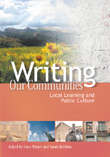
Writing Our CommunityAs we head back to school, we face the challenge of building eclectic groups of students into engaged literacy communities. Once the icebreakers are over, what do you do?

One great solution is to launch a collaborative inquiry-based writing activity that gets students involved with one another. Working in small groups, students can get to know a few others well and can build strong classroom communities as they explore, create, and reflect on their inquiry task.

Local community inquiry projects offer a strong option for the first weeks of class. Contributors to the NCTE book Writing Our Communities: Local Learning and Public Culture explain in their preface:

We believe that students need to engage the multiple communities that surround them and also that those communities benefit from the energy and enthusiasm that students can bring to active citizenship, where citizenship means recovering critiquing, and actively engaging the world around them. Once teachers encourage their students to research and to write about community, the classroom comes alive in wonderful and unexpected ways. As students learn more about the communities around them, they discover how important keeping community ties and creating new ones can be. (p. xi)
What better activity could you hope for in the first days of school than one that encourages creating new ties and strengthening existing ones?

For some classroom activities focusing on local community inquiry, try these resources: